
Congratulations on the new house. Before you unpack the first box, there's one small job that matters more than it looks: making sure only your family can open the doors.
Why rekeying matters after you buy
When you close on a house in Jacksonville, you usually get a couple of keys, maybe a garage remote and a list of codes. What you don't get is a list of everyone else who has a key.
Keys to a house spread quietly over the years:
- The previous owners, and their kids, parents or ex.
- Neighbors who fed the cat or watered plants.
- Housekeepers, dog walkers and pool service companies.
- Contractors, painters and flooring crews from recent work.
- Real estate agents, inspectors and appraisers during the sale.
- On new construction: the builder, subcontractors and cleaners.
Most of these people are honest. But you have no way of knowing who still has a copy, or where it ended up. Rekeying fixes that in one visit.
What rekeying does
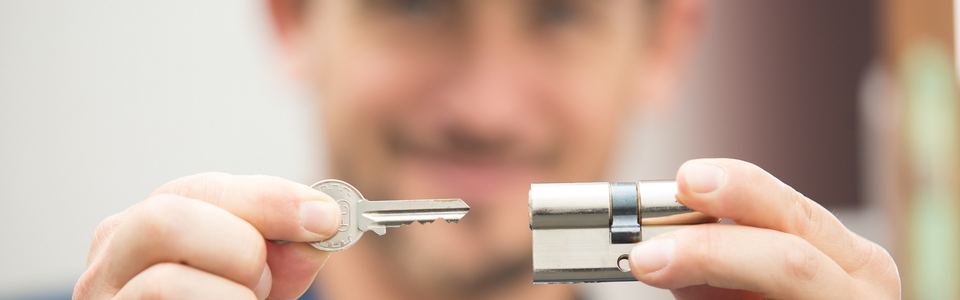
Rekeying changes the pins inside your existing locks so they work with a new key. Every old key, wherever it is, stops working. Your locks stay on the doors, and you get new keys cut and tested before we leave.
It costs much less than replacing locks, and it's quick: a few minutes per lock. For the full comparison, see rekey vs. replace.
Your new-home lock checklist
Walk through the house with this list. It's easy to miss a door.
Keyed locks to rekey
- Front door deadbolt
- Front door knob or handle lock (it's a separate lock)
- Back door and any French doors
- Door from the garage into the house
- Side door into the garage
- Sliding glass door, if it has a keyed lock
- Gate or shed padlocks you want to keep
Codes and electronics to reset
- Garage door opener. Clear the old remotes from the opener's memory and reprogram your own. Look for a "learn" button on the motor unit. Also change the outdoor keypad code.
- Keypad and smart locks. Delete old user codes, remove the previous owner's app account and factory reset if you can. Keep the model number handy.
- Video doorbells and cameras. Make sure the old owner has removed the device from their account.
- Alarm system. Call the monitoring company to transfer the account and change the master code.
Things to ask about
- Mailbox. Many Jacksonville neighborhoods use cluster mailboxes. Ask the seller or your post office whether the lock was changed for you, or whether you need to arrange it.
- Community gates and amenity cards. In gated neighborhoods and planned communities like Nocatee, Julington Creek Plantation and Bartram Park, access cards and gate codes usually come from the HOA. Have the old owner's cards turned off and new ones issued.
- Lockbox. Make sure the listing agent removed the real estate lockbox.
New construction is no exception
If you bought a new home in Nocatee, Bartram Park, eTown or one of the other fast-growing communities on the south side of town, you might assume nobody else has a key. During construction, though, many people had access.
Some builders use construction keying, where the first use of the homeowner key is supposed to lock out the contractors' keys. It's a good idea, but it isn't foolproof, and you can't easily check that it worked on every door. Rekeying removes the doubt.
Make it one key
Most new homeowners end up with a ring of different keys: one for the front, one for the back, one for the garage door. When we rekey, we can usually set every door to the same key.
If your locks are mixed brands, like Kwikset on the front and Schlage on the back, one key can't fit both. We can swap the odd cylinder or two so they match. That usually costs far less than replacing every lock. Let us know what brands you have when you call, and we'll bring the right parts.
Is now the time to upgrade?
Moving in is a natural time to fix anything that bugs you. Consider replacing, not just rekeying, when:
- A lock is rusted, loose or hard to turn.
- The front door has a basic builder-grade deadbolt.
- You'd like a keypad or smart lock so you never need to hide a spare. See smart lock installation.
- The door frame shows splits or old repairs around the strike plate.
We'll tell you honestly which locks are fine to rekey and which are worth replacing.
How a same-day rekey works
- Call or text with your address, how many doors, and the brand of locks if you know it.
- We give you a price before we drive out. You get the full price on the phone before we drive out, and we confirm it before any work starts.
- We check each lock and tell you if any should be replaced instead.
- We rekey every cylinder, clean and lubricate as we go, and set them to one key if you want.
- We cut and test new keys in every lock before we leave.
A typical three-bedroom home with front, back and garage entry doors takes about 30 to 60 minutes. Need extra keys for family? See key duplication.
How many keys to cut
Two keys come with most rekeys, but most households need more. Think about:
- One for each adult in the home.
- One for a teenager who comes home before you do.
- One spare for a trusted neighbor or nearby family member.
- One for a housekeeper or dog walker, if you use one. (A keypad code is often a better choice, because you can turn it off.)
Never put your address on a key tag. If a labeled key gets lost, it's a map to your front door.
Landlords and investors
Buying a rental? Rekey between every tenant, and keep a spare that you control. For several units, ask about a simple master key setup where each tenant's key opens their unit and yours opens all of them.
What our customers say
Some of our favorite reviews come from new homeowners. One customer had their newly purchased home rekeyed the same day. You can read it and others on our reviews page.
Just got the keys?
Call (904) 509-0907 or text us how many doors you have. We're available Mon & Fri 7 AM–2 PM and Tue & Thu 7 AM–6 PM, and we rekey homes across Jacksonville, from Mandarin and Southside to Bartram Park, Nocatee and Ponte Vedra Beach. Learn more on our lock rekeying page.