
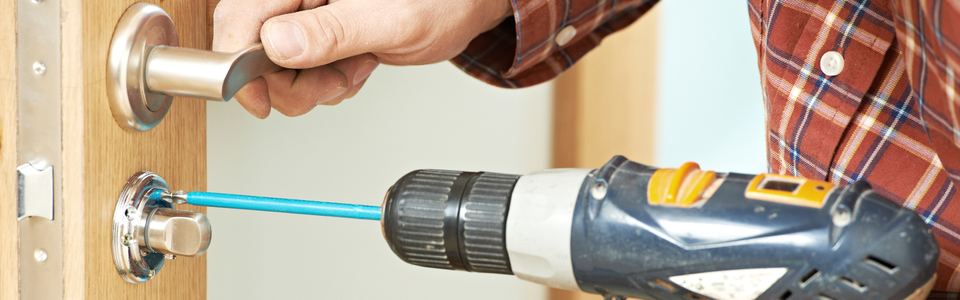
"Should I rekey or replace my locks?" is one of the questions we hear most, usually from someone who just got the keys to a new house. The good news is that the answer is usually simple, and it often saves you money.
The short answer
- Rekey when your locks work well and you need old keys to stop working.
- Replace when your locks are worn, damaged, weak or not what you want anymore.
Most people only need to rekey. Here's how to tell.
What rekeying actually does
Inside most door locks is a cylinder with a row of small pins. Each pin has to be lifted to exactly the right height for the lock to turn. Your key's cuts do that.
When we rekey a lock, we take out the old pins and put in a new set that matches a new key. The lock stays on your door, it looks exactly the same, and it works exactly the same. The only difference: old keys no longer fit the new pin pattern, so they don't turn the lock.
It takes a few minutes per lock. See our lock rekeying page for the full details.
What replacing does
Replacing means taking the whole lock off the door and installing a new one. You get new hardware, a new look if you want it, and new keys.
It takes longer and costs more, but it's the right choice when the lock itself is the problem.
When rekeying is the right call
Rekeying is enough when:
- You just moved in. You don't know who has copies of the old keys: former owners, relatives, contractors, cleaners, agents. Rekeying fixes that. Read more in why you should rekey after buying a house.
- You lost your keys, or they were stolen.
- A roommate, tenant or ex moved out.
- An employee left with a key.
- You want one key for every door, and your locks share the same brand or keyway.
- Your locks are in good shape. They turn smoothly, look fine and feel solid.
When replacing is the right call
Replace your locks when:
- They're worn or failing. Sticky, loose, grinding or hard to turn even after cleaning.
- They're rusted or corroded. Common near Jacksonville Beach, where salt air can seize a cylinder inside a few years.
- They were damaged in a break-in. A forced lock can't be trusted, even if it still turns.
- They're low-grade. Some builder-grade deadbolts are fine for interior doors but weak on a front door.
- You want an upgrade. A smart lock, a keypad, a high-security cylinder or a new finish.
- The brands don't match, and you want one key. Sometimes swapping one or two cylinders is enough; sometimes a new matched set makes more sense.
Side-by-side
| Factor | Rekey | Replace |
|---|---|---|
| Old keys stop working | Yes | Yes |
| Lock hardware | Stays the same | New |
| Makes the lock stronger | No | Yes, if you upgrade |
| Time per lock | A few minutes | 20 to 60 minutes |
| Typical cost | Lower | Higher |
| One key for all doors | Yes, if same keyway | Yes |
| Changes the look | No | Yes |
A quick test to decide
Go to each outside door and ask:
- Does the key turn smoothly?
- Does the deadbolt go all the way out, with the door closed?
- Is the lock free of rust, cracks and wobble?
- Am I happy with how it looks and works?
If you answered yes to all four, rekey it. If you answered no to any of them, that lock may need repair or replacement. We'll look at it with you and tell you honestly which one it needs.
Don't forget these locks
When people rekey or replace, they often miss:
- The door from the garage into the house.
- The side door into the garage.
- A back door or French doors.
- Sliding glass doors with a keyed lock.
- Deadbolts and knob locks on the same door. They're two separate locks.
Special cases
Smart locks and keypads
Most keypad and smart deadbolts still have a key cylinder as a backup. That cylinder can usually be rekeyed like any other lock, so it matches the rest of your house. The codes and app access are a separate job: delete old codes and accounts yourself, or ask us to help. If a smart lock is glitchy, drains batteries fast or has lost its app support, replacing it may be the better call.
Locks that rekey themselves
Some locks, like Kwikset SmartKey, let you rekey with a working key and a small tool. That's handy for a landlord who rekeys often. But if you don't have a working key, or the lock has worn out, you're back to a locksmith.
You've lost every key
You can still rekey. We open the lock first, then rekey it and cut new keys. There's no need to replace a good lock just because the keys are gone.
Commercial doors
Businesses face the same choice. Rekeying is the quick fix when an employee leaves. Replacement makes sense when locks are worn, don't meet your building's needs, or when you're moving to a master key system.
Jacksonville-specific things to consider
- Salt air. East of the Intracoastal, in Jacksonville Beach and Ponte Vedra, a plated lock can corrode inside even when it looks fine outside. If we open a cylinder and find heavy corrosion, we'll recommend replacing it with a better finish. Our high-security locks page covers finishes that last near the ocean.
- Humidity. A lock that's hard to turn in summer may not be worn at all. The door may have swelled out of line. Check with the door open first.
- Mixed brands in older homes. Houses in Mandarin and San Marco that have had several owners often have a mix of Kwikset and Schlage. We can usually swap one or two cylinders instead of replacing everything.
What each option costs
We quote every job on the phone before we come out. For rekeying, the total depends mainly on how many lock cylinders you have. For replacement, the hardware you choose matters most: a basic deadbolt, a Grade 1 deadbolt, a high-security cylinder and a smart lock are very different prices.
You get the full price on the phone before we drive out, and we confirm it before any work starts. See our pricing guide for what affects the total.
Not sure which you need?
Text us a photo of your locks, and we'll tell you whether rekeying will do. Call (904) 509-0907 or text us a photo. We're available Mon & Fri 7 AM–2 PM and Tue & Thu 7 AM–6 PM. If replacement makes more sense, see lock change and replacement.